


Understanding Luke 17: 11-19: A Bible Study on The 10 Lepers
“The true test of a miracle is not what God has done for us ... but rather if we have seen and responded to God’s many graces.”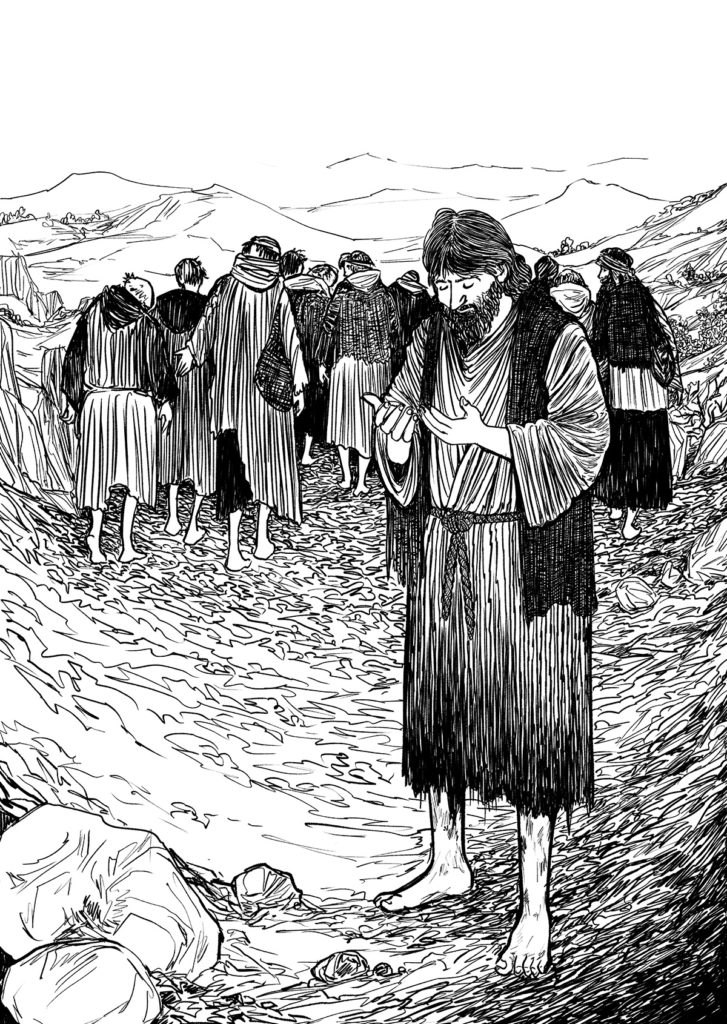
A recent survey found that 92% of people sometimes listen to music while they work and almost half of the people who responded, about 45%, always listen to music while they work. Another study found that listening to music while working was generally beneficial since music helps us to improve our mood and stay on task longer. God has designed humans to fall into a natural rhythm. From the very beginning we were created to work for six days and rest for the seventh. God gave our lives a natural rhythm to follow. Music permeates the Bible. The longest book of the Bible, Psalms, is a book of songs and the Apostle Paul urges us in Ephesians 5:19 to “speak to one another with psalms, hymns, and songs from the Spirit. Sing and make music from your heart to the Lord.”
In our final story in this series, we might never know the name of the single man who returned to give thanks to Jesus, but we know his song. We recognize in his actions a sort of rhythm or pattern that we can emulate in our own lives: See, return, praise, worship, give thanks, get up, and go.
“Now on his way to Jerusalem, Jesus traveled along the border between Samaria and Galilee. As he was going into a village, ten men who had leprosy met him. They stood at a distance and called out in a loud voice, ‘Jesus, Master, have pity on us!’
When he saw them, he said, ‘Go, show yourselves to the priests.’ And as they went, they were cleansed.
One of them, when he saw he was healed, came back, praising God in a loud voice” (Luke 17: 11-15 NIV).
One of the interesting things about this miracle is that it was not immediate. With every other miracle we have examined in this series, the change was instant. When the man was lowered through the roof, we read in Luke 5:25, “At once the sick man got up in front of them. He took his bed and went to his home thanking God.” The same is true of the paralytic beside the pool of Bethsaida. After lying there for 38 years, he folded up his mat and walked away. When demons came out of the man into the pigs, they “ran down the side of the mountain into the water and died” (Luke 8:33b). I imagine the story would be a little different if one at a time the pigs ran into the water over several hours, days, weeks or months. The feeding of the 5000 might not have even been recorded as a miracle if Jesus has simply said, “Go home and find some food on the way.”
While we are accustomed to and even expect miracles in the Bible to be sudden, dramatic and immediate; it is much more common for God’s work to take time. The gradual unfolding of God’s plan is no less miraculous. Just because these lepers went on their way before they were cleansed does not make their experience any less legitimate or real; however, it does mean that they had to open their eyes and notice that a healing had occurred. How often have we failed to notice God’s work because we were not patient enough to wait for God’s plan to unfold?
I think of parents dedicating their children to the Lord. Of course, the prayers they make on that day for their children to love and follow Jesus do not come to fruition until years and sometimes decades later. They must be patient and consistent if they are going to witness the miracle of grace and redemption in the lives of their children. Sometimes the answer to those prayers is “Go and see!”
Of course, seeing God work is not the end. Our recognition of God’s response is just the beginning of the song. When the leper saw that he was healed, he returned. He came back. Martin Luther was once asked to describe the true nature of worship. He replied, “the tenth leper turning back.” The true test of a miracle is not what God has done for us (because everything we are and have comes from God), but rather if we have seen and responded to God’s many graces. In simple terms, the difference between those who simply show up for church and those who worship is returning. Worshippers come back again and again because they understand who and what Jesus is.
This realization is the well from which our praise and worship comes. There is no complicated formula to worship. To see and understand who Jesus is and what He has done for us prompts us to return and praise Him. It’s like the difference between a participation trophy and a first-place trophy. While the design of the two are similar everyone knows that only one went to the winner while everyone else got the other for merely showing up. Worship is not about us showing up, singing a few songs and getting our ribbon; worship is crowning the King of Kings and Lord of Lords with the praise and adoration of which God alone is worthy. Only one leper understood this. Luke 17:16 says, “He threw himself at Jesus’ feet and thanked him.”
Thankfulness is at the heart of this story, and it is a choice. All ten of the lepers presumably experienced the same healing, but only one chose to show his gratitude and that made all the difference.
“Jesus asked, ‘Were not all ten cleansed? Where are the other nine? Has no one returned to give praise to God except this foreigner?’ Then he said to him, ‘Rise and go; your faith has made you well'” (Luke 17:17-19 NIV).
To this one, the one who returned, Jesus says that he has been “sozo.” The word has a range of meanings from deliverance to well-being. In the New Testament it is most often used as a word to describe the complete work of salvation — justification, deliverance from sin, and being brought into a right relationship with God. Because this man saw, returned, praised, worshipped, and gave thanks; he has not just been freed from his physical disease, but he has also been cured of his sin sickness.
In many ways, the story of this nameless leper is the easiest story to place ourselves. Not all of us can empathize with a Samaritan woman who has had five husbands. Most of us have probably never experienced paralysis or demon possession. We never had the opportunity to share our lunch with 5000 people or to experience life as an itinerate preacher; however, all of us have experienced God’s blessing. We are here today because at some moment we crossed paths with Jesus. The Savior of the world made a difference in our lives. From that moment, we had a choice — would we continue trying to decipher the noise of the world or would we embrace the rhythm of our Savior? Like the one thankful man, we can sing a song of thankfulness and salvation because God has transformed our lives. It is God’s favorite song and one which is meant to be sung to the world. Jesus is calling each of us to “Rise up and Go.”
Go into the world healed and whole.
Go into the world confident that Jesus knows your name.
Go into the world empowered by Holy Spirit.
Go into the world with the song that Jesus gave to you.
The Song of the Tenth Man: Luke 17:11-19
11 As Jesus continued on toward Jerusalem, he reached the border between Galilee and Samaria. 12 As he entered a village there, ten men with leprosy stood at a distance, 13 crying out, “Jesus, Master, have mercy on us!”
14 He looked at them and said, “Go show yourselves to the priests.” And as they went, they were cleansed of their leprosy.
15 One of them, when he saw that he was healed, came back to Jesus, shouting, “Praise God!” 16 He fell to the ground at Jesus’ feet, thanking him for what he had done. This man was a Samaritan.
17 Jesus asked, “Didn’t I heal ten men? Where are the other nine? 18 Has no one returned to give glory to God except this foreigner?” 19 And Jesus said to the man, “Stand up and go. Your faith has healed you.
Illustration by Rohan Eason | This article was originally titled “Nameless and Known: The 10 Lepers (Luke 17: 11-19)” in the August 2026 issue of The War Cry.